Agentic computing
“Should AI agents act inside our processes, and under which controls?”
Multi-agent systems and collaborative AI architectures that support work, decisions, and organizational processes.
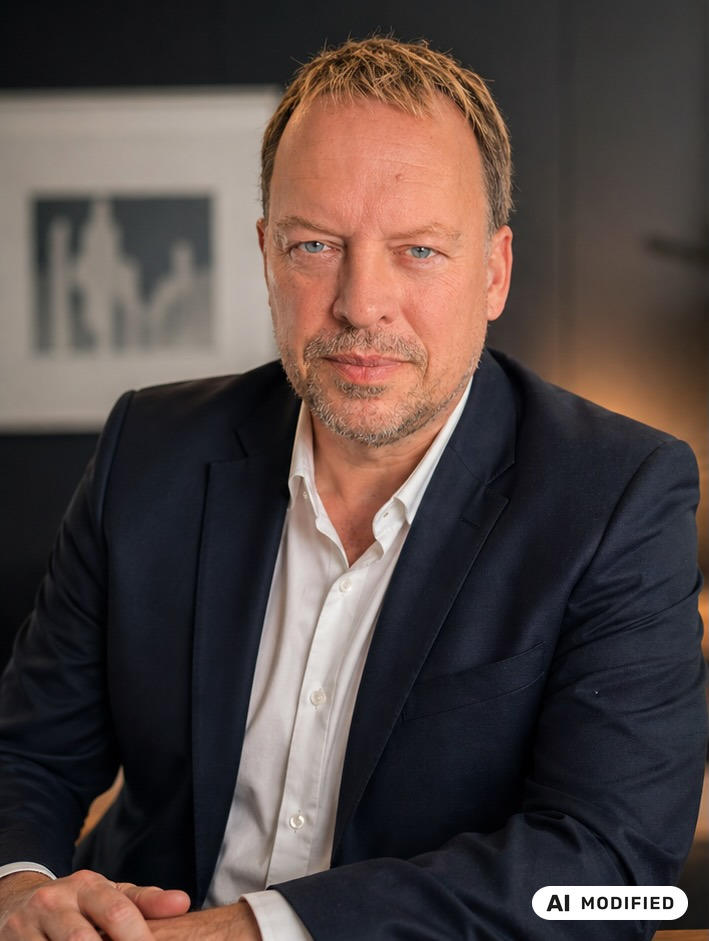
Martin Gaedke
For leaders and project teams facing an AI or digital transformation decision that is expensive to get wrong. You describe the question, I assess it against current research and practical reality, and you receive a written, sourced document you can put in front of your board or committee.
Two or three sentences are enough. You get a personal reply, usually within two working days, and if it does not fit, a no with a reason.
01Topics
If your question sits in one of these fields, it is likely a fit.
Agentic computing
Multi-agent systems and collaborative AI architectures that support work, decisions, and organizational processes.
AI operating systems for managers
Structured AI-supported workflows, decision environments, and management systems, an approach I use daily in my own one-person company.
Digital governance
Accountability, compliance, responsibility, security, and long-term institutional capability.
Scientific transfer into practice
Translating research-based thinking into assessments, orientation, and action in real organizational settings.
02Contributions
Choose by the question you are facing. Four formats end in a written, sourced document you can put in front of your board or committee; the fifth is a session for your team. Each has a scope agreed up front, with no open-ended billing.
Expert assessment
An assessment of your AI strategy, concept, architecture, or organizational approach from a scientifically grounded perspective.
You get: a written assessment with a structured recommendation, scope and delivery date agreed up front.
Scientific review
A close reading of your documents, drafts, position papers, concepts, or project ideas for strengths, weaknesses, assumptions, and open issues.
You get: written review notes on your material, with an optional discussion session.
Research-based recommendations
Structured recommendations on AI, agentic systems, governance, and digital transformation, each traced to its sources.
You get: a compact decision brief with the options, the reasoning, and the recommendation I would sign.
Scientific writing and commentary
Position papers, background texts, and commentary at the interface of science and practice.
You get: a commissioned text with agreed scope, sources, and a review loop.
Knowledge transfer formats
Workshops and structured conversations that turn research insight into practical orientation for your team.
You get: a focused session, remote or on site, prepared around your questions.
These formats work best when a decision is already on the table and there is material I can read.
Not sure which one fits? Describe your question in two or three sentences. I reply personally, usually within two working days. If it does not fit, you get a no with a reason and, where I can, a pointer to someone better placed.
Request a fit check03Who is writing
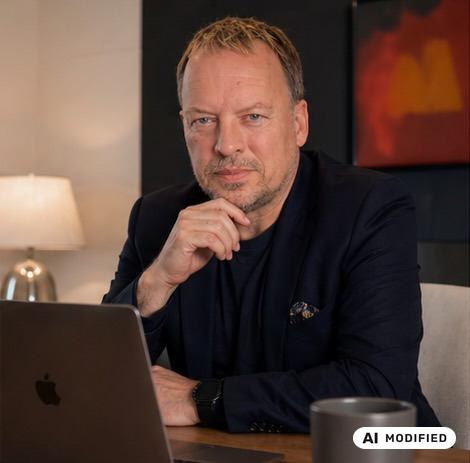
Prof. Dr. Martin Gaedke
I am a professor and researcher in computer science and web engineering, with leadership experience in digital transformation and industry-oriented collaboration.
My research connects distributed systems, agentic AI, and responsible coordination between people and technology. Recent coauthored work looks at governance-aware AI agents and at AI in scientific knowledge systems.
I have no technology to sell and no implementation to win. That leaves me free to tell you what the evidence supports, where I see the risks, and what I would recommend.
I also run my own one-person company with AI agents every day, under rules that are written down and published, including the parts that did not hold.
04Why people contact me
People get in touch when an AI question is strategically important, technically complex, or hard to evaluate from inside their own organization.
05Perspective
Most AI questions are not purely technical. They affect workflows, decision structures, capabilities, and responsibilities.
That is the space I work in: between emerging AI research and real application, where a promising idea has to be assessed, translated, and challenged before you commit budget and reputation to it.
I know what breaks, because it has broken here first: my own company runs on AI agents, and its dated readings, including the failures, are published.
Documents you share with me for an engagement go into no external AI service without your explicit consent.
06How I work
Four steps, and the effort on your side stays small.
I take on a deliberately small number of engagements alongside my research: asynchronous by default, written by preference, and focused by design.
My external work is focused on scientific services, scientific review, scientific writing, and knowledge transfer. This includes expert assessments, research-based recommendations, and transfer-oriented collaboration at the interface of science and practice. This website does not offer legal advice, tax advice, or unrestricted management consulting.
The services offered here are carried out independently of my university role and without the use of university resources. Research partnerships in publicly funded consortia are arranged in whichever role the project requires, and that is settled before any commitment.
07Contact
Send two or three sentences about your question or project. I read every message myself and reply personally, usually within two working days. If it fits, you receive a proposal with a fixed scope agreed up front. If it does not, you get a no with a reason and, where I can, a pointer to someone better placed.
Or write directly to martin@gaedke.ai
No email window opened? Your browser may have no mail app configured.
You can write directly to martin@gaedke.ai